
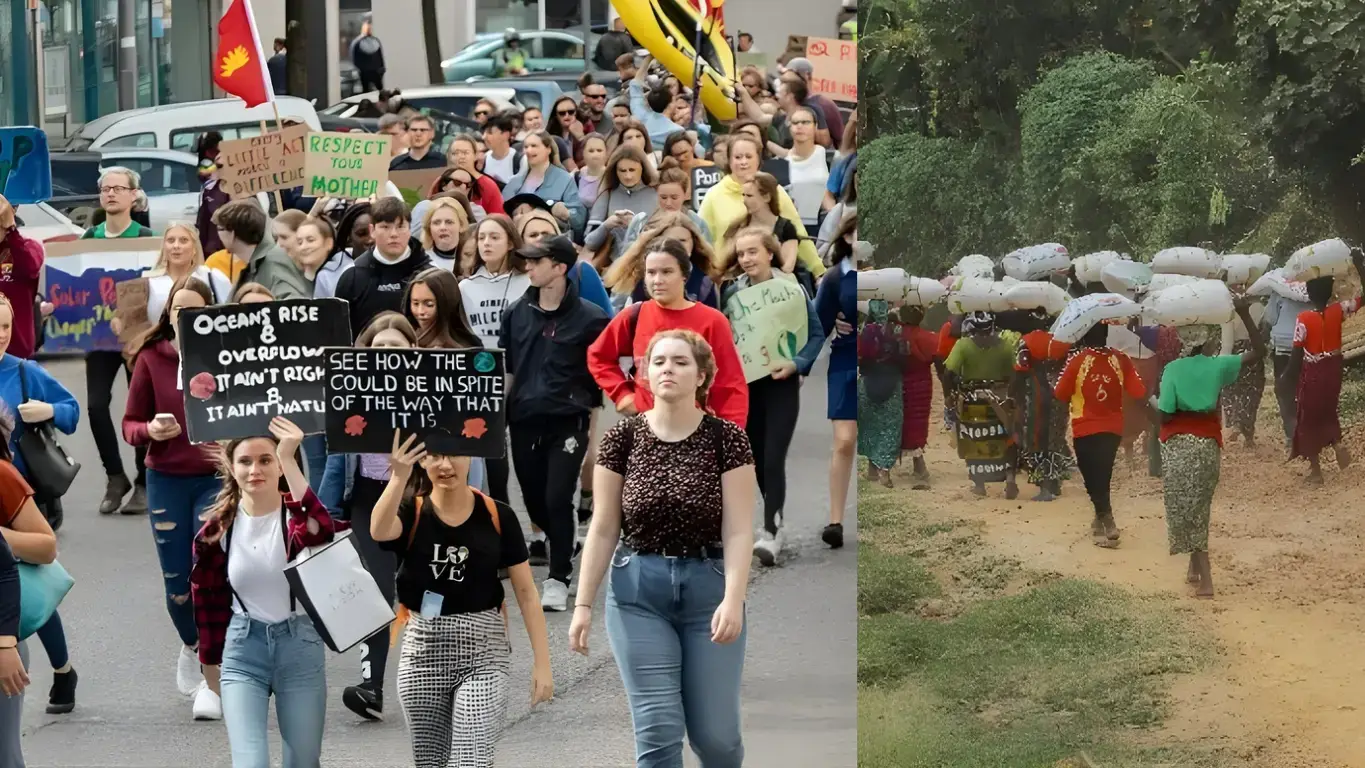
One of the main examples is water scarcity. Women and girls spend millions of hours every day collecting water and when droughts drag on or floods disrupt supplies, that workload gets heavier. This would eventually lead women having less time for school, less time for paid work which shows cycles of inequality. In agriculture field, women farmers from low-income countries deal with crop losses and shrinking incomes as weather patterns get more unpredictable. Rising temperature is also another concern as it increases the risks of maternal health of woman, especially during pregnancy and childbirth. Further, when disasters caused by climate change force people to move, women often face greater exposure to gender-based violence. Girls are frequently pulled out of school to help families cope, which keeps the cycle of inequality going. These impacts shows that when climate pressures rise, women carry the heaviest burden.
According to the UN–EU Spotlight Initiative put out a rep͏ort in 2025, titled “Colliding Crises: How the Climate Crisis Fuels Gender-Based Violence”, and it highlights that climate disasters make things even worse for women and are a ‘threat multiplier’. The study emphasizes that if we have a 2°C warming scenario, each year around 40 million more women might face intimate partner violence. That number really underscores the urgency, addressing the importance on gender and climate change.
Despite these challenges, women are not just victims of climate change, they are also key agents of resilience. In various communities, women embrace climate-smart farming methods, coordinate disaster preparedness, and advocate for inclusive policies that enhance sustainability’s impact.
In conclusion, Women and girls carry a disproportionate amount of the burden, from water scarcity and agricultural losses to risks to health, displacement, and educational setbacks. At the same time women are emerging as strong leaders in climate resilience, leading policy advocacy, community organizing, and sustainable farming. Climate policy needs to be gender-sensitive and established in feminist environmentalism, if we are serious about creating a more equitable and environmentally friendly future.
We don’t just talk about the challenges women face in climate change, we also explore solutions with regards to gender and climate change. The 9th International Conference on Gender and Sexuality 2026 is your chance to join these groundbreaking conversations, connect with leading experts, and contribute to shaping the future of gender and sexuality studies. This unique hybrid event will take place in Chiang Mai, Thailand, and online, on October 22-23, 2026. Don’t miss the opportunity to gain invaluable insights, share your research, and network with a global community dedicated to advancing gender equality and building sustainable futures.
Follow the Women & Gender Community channel on WhatsApp