
Special Events
- Home
- Special Events
Special Events & Workshops | Gender and Sexuality Conference 2026
As part of the International Conference on Gender and Sexuality 2026, we offer a series of special events designed to enrich the overall conference experience and support meaningful academic engagement. These events provide opportunities for participants to deepen their understanding of current issues in Gender and Sexuality, connect with global experts, and engage in collaborative learning beyond the main conference sessions.
Our special event lineup at the 9th International Gender Conference includes a range of interactive and insightful activities such as pre-conference workshops, conference day workshops, networking opportunities, and cultural experiences. These sessions are tailored to support researchers, academics, practitioners, and students attending the Gender and Sexuality Conference 2026, helping them gain new perspectives and build long lasting professional connections.
Whether you are joining the Academic Conference on Gender and Sexuality to expand your research, explore new methods, or engage in global conversations on gender equity, our special events offer valuable spaces for engagement, learning, and collaboration.
Pre-Conference Workshop
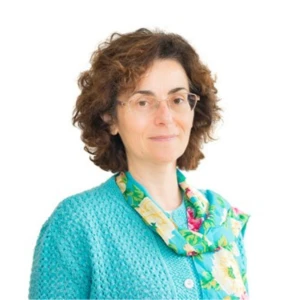
Dr. Christina Marouli
Facilitator
Associate Professor
American College of Greece
Biography
Christina Marouli, Ph.D., is a Professor at the Environmental Studies Programme, Deree-American College of Greece (ACG) and has an extensive teaching, research, and consulting experience. Her work and research focus on sustainable cities and gender, food waste, education for sustainability and social change. She is a socially active scholar (worked at NGOs for women and children; founded the ACG Center of Excellence in Sustainability; monitored EU-funded environmental projects).
Pre-Conference Workshop on “Gender-responsive Action Research: Thinking together”
- Date: 06th April, 2026
- Time: 03:00 PM – 04:00 PM IST
Overview
How can our research generate gender-sensitive knowledge and empower the participants for a sustainable and equitable world? This is the main question this workshop will try to address by looking into the Feminist Action Research methodology. Feminist Action Research is participatory; challenges the researcher-researched power dynamic; and aims to the valuation of different forms of, including everyday, knowledge. This workshop will discuss theory and practical considerations, hoping to offer a place where participants can share and reflect together on research methods that empower women and other marginalized peoples.
Key Takeaways
- Which are the principles and practices of Feminist Action Research (FAR)
- What makes feminist research distinct and what makes it challenging to implement
- What contributes to rendering feminist research empowering for the participants
- How can we use Feminist Action Research (FAR) for a more sustainable and equitable world
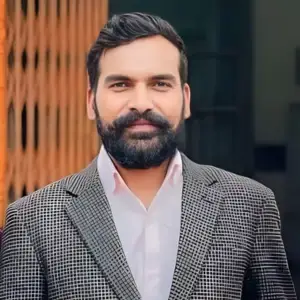
Dr. Naresh Prajapati
Facilitator
Assistant Professor of Law
School of Law, Bennett University
Greater Noida, India.
Biography
Dr. Naresh Prajapati is an Assistant Professor of Law at the School of Law, Bennett University, India, and recipient of the Chancellor’s Award for Best Ph.D. Scholar. His research focuses on international climate change law, human rights, international environmental law, and comparative constitutionalism, particularly within the South Asian region. He completed his Ph.D. at the Central University of Punjab with a comparative study on judicial approaches to human rights protection amid climate change in India, Bangladesh, Sri Lanka, and the Maldives. His work has been published in leading international Scopus-indexed journals (Q1–Q2), including the Journal of International Women’s Studies, Global Knowledge, Memory and Communication, Manchester Journal of Transnational Islamic Law & Practice, and the International & Comparative Law Quarterly. Dr. Prajapati actively engages in international scholarship through conference presentations across Kazakhstan, Türkiye, Sri Lanka, Bangladesh, Maldives, and Nepal. He has served as a pre-conference workshop speaker, session chair, and international lecturer, including delivering a lecture on transboundary water governance at the Institute of Social and Political Sciences, Tashkent, Uzbekistan. He also contributes to academia as a reviewer and editor for several international journals and conferences, including the Journal of International Women’s Studies and the Africa University Law Review.
Pre-Conference Workshop on “Preparing Scopus-Indexed Research Manuscripts Using Secondary Qualitative Data: Methods, Analysis, and Publication Strategies”
- Date: 05th May, 2026
- Time: 02:00 PM – 03:00 PM IST
Overview
This workshop provides practical guidance on how to prepare research manuscripts for Scopus-indexed journals using secondary qualitative data. Participants will learn how to identify research gaps, collect and analyze secondary qualitative data (e.g., literature, reports, documents), and convert findings into a well-structured academic manuscript. The workshop also introduces qualitative analysis methods, academic writing standards, journal selection, and the peer-review process to help researchers successfully publish in reputable journals.
Key Takeaways
- Understand secondary qualitative data analysis and its applications in research.
- Identify research gaps and formulate research questions using existing data.
- Apply qualitative analysis techniques such as coding and thematic analysis.
- Structure a Scopus-ready manuscript (Introduction, Methods, Results, Discussion).
- Follow academic writing, citation, and publication ethics standards.
- Select appropriate Scopus-indexed journals for submission.
- Navigate the journal submission and peer-review process effectively.
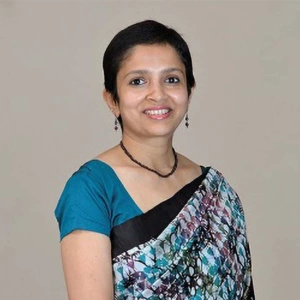
Prof. Shivani Singh
Facilitator
Assistant Professor
Liberal Arts, Inter-Disciplinary School of Science
Savitribai Phule Pune University
Biography
Pre-Conference Workshop on “Introduction to Intersectional Research Methods in Gender & Sexuality Studies”
- Date: 07th August, 2026
- Time: 03:00 PM – 04:00 PM IST
Overview
This workshop provides participants with an understanding of intersectionality as a framework for research in gender and sexuality studies. Intersectionality examines how multiple social identities such as gender, sexuality, race, class, caste, disability, and age interact to shape experiences of privilege and marginalization. The session will introduce practical research methodologies, including qualitative and mixed-method approaches, that allow scholars and practitioners to capture these complex, interwoven realities. Participants will learn how to design research questions, collect and analyze data, and interpret findings in a way that is sensitive to intersecting identities and social structures.
The workshop is ideal for early-career researchers, graduate students, and practitioners seeking to enhance their analytical and methodological skills in gender and sexuality studies.
Key Takeaways
- Clear understanding of intersectionality and its relevance in gender and sexuality research.
- Ability to design research questions that consider multiple, overlapping social identities.
- Familiarity with qualitative, quantitative, and mixed-method approaches for intersectional analysis.
- Practical skills in collecting and analyzing data that reflect complex lived experiences.
- Strategies to interpret findings using an intersectional lens to inform research, policy, and advocacy.
Workshops on Conference Day
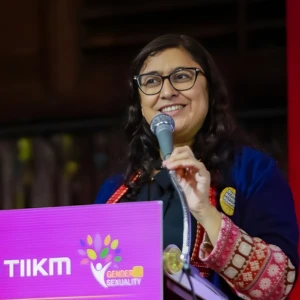
Prof. Shahana Rasool
Facilitator
Department of Social Work and Community Development
University of Johannesburg
South Africa
“World Cafe” Session
This interactive session is designed to gather participants’ insights, experiences, and suggestions to help shape the next edition of the conference. Through small group discussions and collaborative dialogue, participants will share their views on how the conference can be improved in terms of themes, session formats, networking opportunities, and overall participant experience. The session will also provide a platform to propose new ideas, identify emerging topics of interest, and strengthen future collaboration within the conference community. The feedback collected will directly contribute to enhancing the quality, relevance, and impact of next year’s conference.

Assoc. Prof. Panagiotis Pentaris
Facilitator
Director of Research Studies for the Department of Social,
Therapeutic and Community Studies at Goldsmiths University of London,
UK
Workshop on "From Draft to Publication: Writing on Gender and Sexualities"
This workshop is designed to support early-career researchers and scholars in developing and refining academic writing on gender and sexualities. It will guide participants through key stages of the publication process, from conceptualizing a strong argument and structuring a manuscript to selecting appropriate journals and responding to peer review feedback. The session will also address common challenges in writing about gender and sexualities, including ethical considerations, positionality, and interdisciplinary approaches. Through practical insights and discussion, participants will gain strategies to enhance the clarity, rigor, and impact of their work, ultimately strengthening their chances of successful publication.
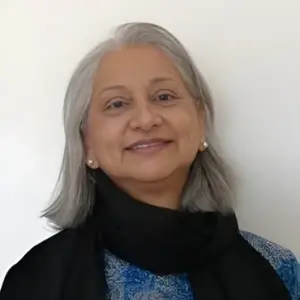
Dr. Raiza Kolia
Facilitator
Co-Founder and Executive Director of Reaching Across Borders
Lebanon
Workshop on "Cultural Humility in Action: Decolonial Feminist Practice with Women Refugees and Displaced Communities"
This interactive workshop examines how cultural humility can be practiced within a decolonial feminist framework when working with women refugees and displaced communities. Moving beyond static notions of “cultural competence,” the session emphasizes reflexivity, power awareness, and ethical, community-centered engagement. Through brief case-based discussions, practical exercises, and real-world scenarios, participants will explore strategies to center the voices, agency, and knowledge of displaced women while challenging dominant narratives and inequitable practices. Attendees will leave with concrete tools to foster more inclusive, collaborative, and responsible approaches across research, policy, and fieldwork contexts.